

Glass Christmas Baubles vs Plastic: The Core Differences
When deciding between glass vs plastic baubles, you're shaping how your tree looks, how safe it is around children and pets, how long decorations last, and what you'll spend over time. The difference isn't just aesthetic, it's practical.
Glass baubles offer clarity, sparkle, and a weight that holds branches in place. Plastic ornaments deliver durability, lightweight convenience, and peace of mind in homes with young children or curious pets.
Glass looks better but demands care. Plastic forgives neglect but rarely achieves the same visual impact. Neither is objectively "right", the answer depends on your household, your tree, and how much effort you're willing to invest.
Glass Baubles Pros and Cons
Glass baubles excel at catching light and reflecting it back with genuine brilliance. This isn't marketing language, it's physics: glass refracts light differently than plastic, creating depth and sparkle that photographs capture and rooms genuinely feel.
Glass is also heavier, so ornaments stay put on branches without constant adjustment. They don't fade or discolour the way some plastics do, and a quality glass bauble can be reused for decades. Many families pass glass ornaments between generations, something that rarely happens with plastic.
But glass breaks. A dropped bauble shatters into sharp fragments that pose genuine risks around bare feet, crawling infants, and curious pets. Storage demands protection, bubble wrap, individual boxes, or specialised containers, and one careless moment unpacking can destroy a treasured ornament.
Glass is also heavier on your tree: thin branches bend under the weight. On a small artificial tree or delicate live spruce, loading it with glass baubles means strategic placement and potential branch damage.
Glass vs Shatterproof Christmas Baubles: Safety and Durability
Shatterproof alternatives complicate the choice. These ornaments use plastic cores with glass-like coatings, or acrylic formulations designed to mimic glass without the breakage risk. They're marketed as "the best of both worlds," but reality is more nuanced.
Shatterproof ornaments genuinely don't shatter. Drop one and it bounces. This matters enormously in homes with toddlers, energetic dogs, or rental properties where you can't afford damage: no sharp fragments, no emergency room visits, no lingering anxiety about hidden shards.
The durability claim is more complex. Many shatterproof ornaments hold up well, but some acrylic formulations become brittle in cold storage or develop stress fractures that aren't visible until the ornament fails mid-season. The coating on glass-core shatterproof ornaments can also chip or peel, exposing the glass underneath and defeating the safety purpose.
Where shatterproof ornaments fall short is appearance. The light refraction is flatter and more muted, so they read as "plastic that looks like glass" rather than glass itself. If visual impact is your priority, they're a compromise, not a solution.
Appearance, Sparkle, and Design Options
Glass has a high refractive index relative to most plastics.
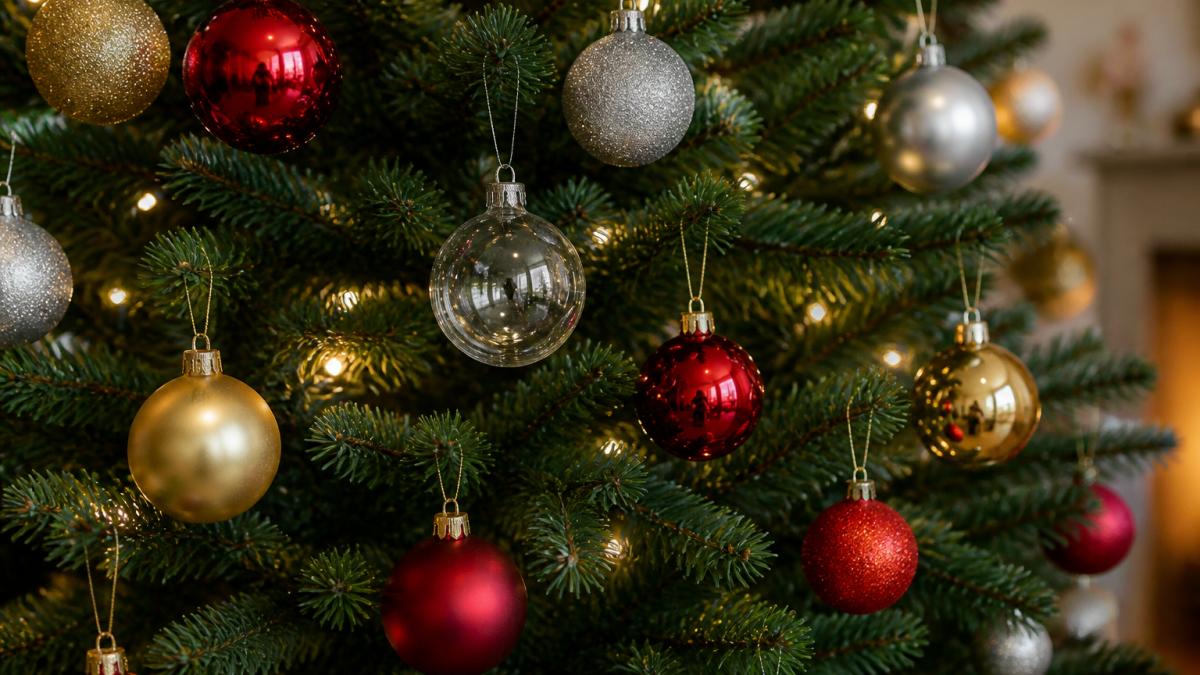
Finish matters as much as material. Clear glass shows maximum sparkle and clarity, frosted or matte finishes diffuse light softly, and metallic finishes reflect light in ways that feel warm or cool depending on your palette.
Plastic ornaments offer practical design advantages: they come in shapes, colours, and textures that would be fragile or expensive in glass, including trendy metallics and pastels glass manufacturers rarely produce.
But neither glass nor plastic is a single quality tier.
With glass, look for even wall thickness and a clean, bright interior coating; cheap glass often has visible seams, uneven silvering, and off-centre caps.
Colour stability is another differentiator. Plastic fades as UV exposure and heat cycles break down pigments and coatings, so a vibrant red plastic bauble can become rust-coloured after a few seasons.
Traditional styling favours glass, and vintage ornaments are almost universally glass; if you're building a collection with historical or aesthetic continuity, plastic feels out of place. Modern styling is more flexible, mixing materials intentionally.
How to Store Glass Christmas Baubles Safely
Storage determines whether your glass baubles survive until next season. Poor storage turns a collection into a box of fragments.
The basic principle: separation and cushioning. Each bauble needs its own protected space. Original packaging is ideal, the cardboard sleeves or plastic clamshells manufacturers use are designed for this. If you've lost original packaging, create alternatives.
Wrap each bauble individually in tissue paper or bubble wrap, then place them in a sturdy box with dividers. Egg cartons, divided storage boxes, or newspaper-lined shoeboxes provide compartments that prevent baubles from touching and knocking during transport or storage.
Temperature and humidity matter more than most people realise: extreme cold makes glass brittle, and excessive humidity can corrode metal caps or cause mould on packaging. Store baubles in a cool, dry place, and avoid damp basements or unheated garages where temperature swings are severe.
Label your storage containers. Note the year you packed them and whether any baubles need repair or replacement. This simple step saves time when you're unpacking next season.
Vintage Glass Christmas Ornaments: Craftsmanship and Value
Vintage glass ornaments are a different category entirely, often handmade or hand-decorated using techniques modern manufacturers have largely abandoned.
Blown glass ornaments were shaped by hand, making each one slightly unique, and the glass is thinner and more delicate than contemporary ornaments. Hand-painted designs show brushstrokes that signal authentic craftsmanship, and vintage "unsilvered" finishes have a subtle, aged quality impossible to replicate artificially.
The value of vintage ornaments compounds over time as originals become scarcer. Families pass these down specifically because they're irreplaceable, and you treat a vintage ornament differently than a mass-produced modern one.
Vintage ornaments also tell stories: a bauble from the 1950s carries the aesthetic and materials of that era, making collecting a form of historical engagement, not just seasonal decoration. If that appeals to you, vintage glass baubles offer something plastic never will.
The downside is fragility and cost: vintage ornaments are more likely to break because they're older and sometimes thinner, and they're more expensive per bauble. For a large tree, a fully vintage collection isn't practical for most budgets.
Making Your Choice: Cost, Lifestyle, and Sustainability
The total cost of ownership extends far beyond the price of individual ornaments, and the environmental question is more nuanced than "glass good, plastic bad". Here's a practical framework for both.
Total cost of ownership
A useful way to compare is cost per season of use, not cost per bauble. A mid-range glass bauble might cost more upfront than a comparable plastic or shatterproof bauble. If the glass bauble lasts significantly longer than the plastic one, the glass bauble's cost per season can be lower. The upfront price gap narrows or reverses once replacement frequency is included.
Breakage changes the calculation. In a household with young children, pets, or frequent moves, a single dropped bauble can remove an ornament from the set. Plastic and shatterproof ornaments absorb that risk, which often offsets their higher replacement frequency with lower loss rates.
Storage damage is the hidden cost: glass stored loose will chip and crack, while plastic in a hot loft can warp or become brittle. Both reward proper storage, but glass punishes poor storage more severely and more immediately.
Environmental impact across the lifecycle
Neither material is automatically eco-friendly. The honest comparison looks at sourcing, manufacturing, transport, lifespan, and end-of-life.
Glass is made from sand, soda ash, and limestone melted at high temperatures, an energy-intensive process that gives new glass a relatively high embodied carbon footprint. Glass is infinitely recyclable, but UK kerbside collections typically accept bottles and jars rather than decorative glass, and baubles are usually excluded because of their coatings, metal caps, and mixed materials. In practice, most glass baubles end up in general waste unless a specialist recycling route exists.
Plastic ornaments are typically made from polystyrene, acrylic, or PET derived from petrochemicals. Manufacturing energy is lower per unit than glass, and they're much lighter, reducing transport emissions. The problem is end-of-life: most aren't kerbside recyclable, and they persist in landfill for centuries or break down into microplastics. A plastic bauble replaced every five years compounds that footprint.
The lifecycle conclusion is conditional. Glass has a higher manufacturing footprint but a much longer service life, so its impact per season can be lower if the ornaments are genuinely kept for decades. Plastic has a lower manufacturing footprint but a shorter life and worse disposal profile. The worst outcome for either material is buying cheap, replacing often, and sending the old set to landfill.
A decision framework by household and use case
Use this as a quick chooser rather than a set of rules:
- Household with toddlers, crawling infants, or curious pets: prioritise shatterproof or plastic for the lower branches and any ornaments within reach. Reserve glass for the upper tree or for display areas children cannot access.
- Rental property or frequent mover: favour plastic and shatterproof for transport resilience, or invest in proper divided storage if you want glass.
- Small or delicate tree: favour lightweight plastic or small glass baubles; heavy glass on thin branches causes bending and drop risk.
- Large artificial or cut tree with strong branches: glass is practical and gives the best visual return.
- Outdoor or porch display: use plastic or shatterproof only; glass is unsuitable for exposed outdoor use.
- Collector or traditional stylist: glass and vintage glass reward the investment, provided you store them properly.
- Budget-first buyer: a mixed set, glass for focal points and plastic for filler and low branches, often gives the best appearance per pound.
| Factor | Glass Baubles | Plastic Ornaments | Shatterproof |
|---|---|---|---|
| Upfront cost per bauble | Higher | Lower | Moderate |
| Expected lifespan with good storage | 20-50+ years | 5-10 years | 10-15 years |
| Breakage risk | High | Very low | None |
| Visual sparkle | Excellent | Good | Fair |
| Storage demands | High | Low | Low |
| Colour fade | Minimal | Significant | Moderate |
| Kerbside recyclable | Rarely | Rarely | Rarely |
| Best use case | Focal display, upper tree | Low branches, family homes | Family homes, rentals |
The choice in glass vs plastic baubles isn't about one being objectively better, it's about alignment. Glass rewards investment and care with beauty that lasts; plastic prioritises safety and convenience. If you value visual impact and will handle fragile ornaments carefully, glass delivers. If safety, simplicity, and low maintenance matter more, plastic or shatterproof options make sense.
Frequently Asked Questions
Are glass baubles more expensive than plastic baubles?
Glass baubles typically cost more upfront than basic plastic alternatives, particularly hand-blown or vintage glass ornaments. However, glass baubles last decades if handled carefully, whereas plastic often fades or becomes brittle within a few years. Total cost of ownership can favour glass for long-term collectors. Pricing depends on craftsmanship, size, and design complexity, visit our collection to see current options.
Which baubles are safer for homes with children or pets?
Shatterproof plastic baubles are the safest choice if you have young children or playful pets. They withstand drops and bumps without breaking. Glass baubles require careful placement on upper tree branches, away from curious hands and tails. If you prefer glass but have safety concerns, store them in secure locations and use plastic baubles on lower branches accessible to children and pets.
How can you protect glass Christmas baubles from breaking?
Use padded storage boxes or compartmentalised ornament cases to prevent baubles touching during storage. Wrap each bauble individually in tissue paper or bubble wrap. Store boxes in a cool, dry place away from direct heat or humidity. When decorating, place glass baubles on sturdy upper branches away from high-traffic areas. Avoid placing them near ceiling fans or in draughty spots where they might swing into branches.
Do glass or plastic baubles look better on a Christmas tree?
Glass baubles offer superior sparkle, clarity, and depth of colour, creating a more elegant, traditional appearance. Hand-blown and vintage glass ornaments provide unique character and craftsmanship. Plastic baubles are improving in quality and can mimic glass finishes convincingly, though they lack the same luminous quality. Your choice depends on your aesthetic preference and whether you prioritise appearance or durability and safety.